
Home › Product & Delivery Disclaimers
Product & Delivery Disclaimers
Natural stone varies, loads are heavy, and you unload the truck. Here is exactly what that means before you order — in plain language.
Last updated September 24, 2026
The short version
We sell a natural product that comes out of the ground, and we ship it on a 24-ton truck that you unload. That reality drives almost everything on this page. None of it is fine print we hide — we would rather you know before you order than be surprised on delivery day.
This page is a plain-language summary. The binding terms are in our Terms of Sale.
Every stone is different
Color, veining, fossils, texture and grain vary naturally — block to block, pallet to pallet, load to load, and across the quarry ledge. Stone cut this month will not match stone cut last spring.
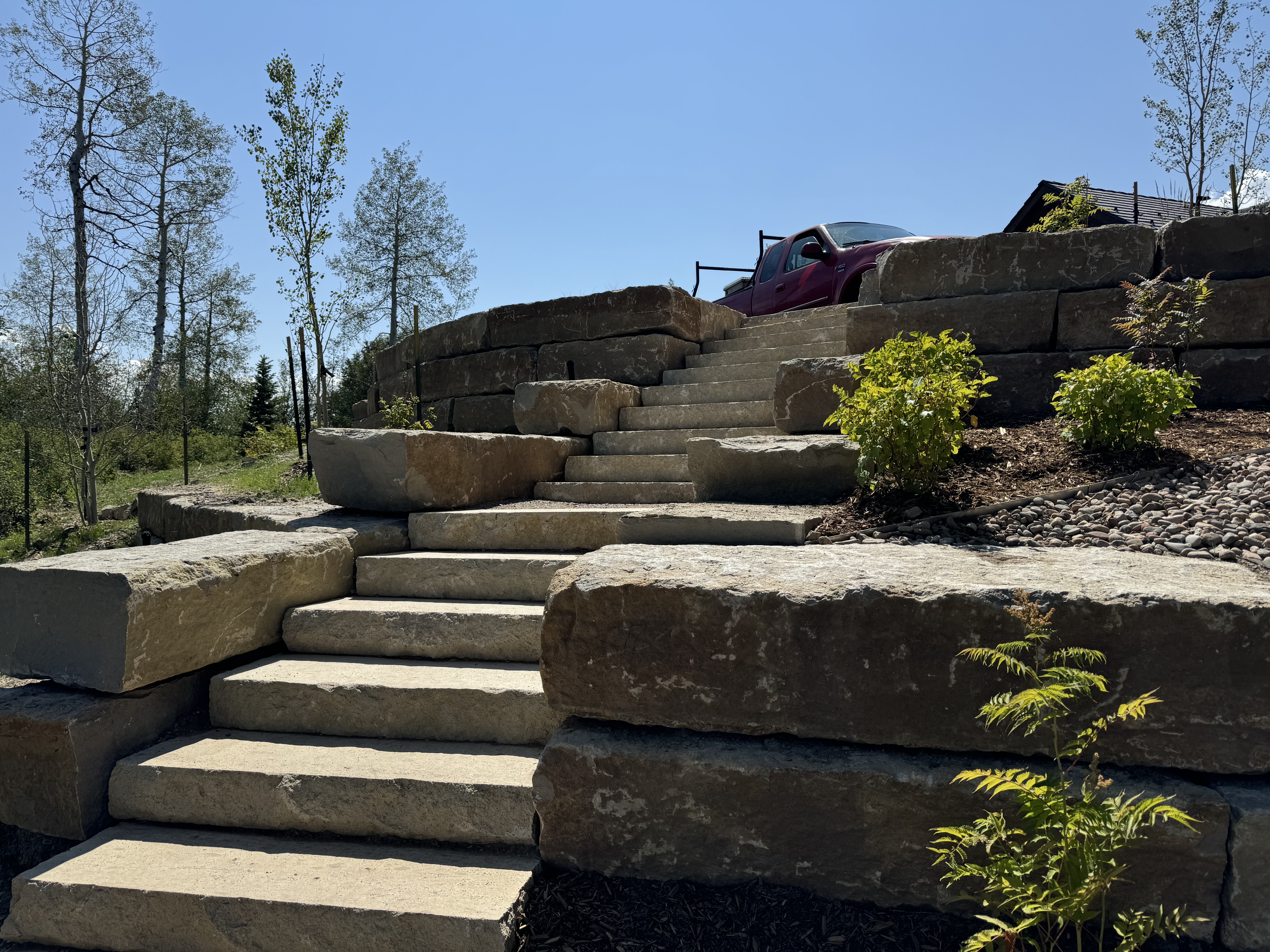
Photos on this site, in our gallery, and any sample we send are representative, not exact. They show you the range. Your stone will look different from the picture, and that is normal.
If tight color consistency matters, tell us up front and order the full quantity at once. We will do everything we can — but we cannot promise a match.
Sizes are nominal
Our 14" ledge stone runs about 14" thick, give or take an inch. Milled stone is planed on the top and bottom beds to about 12¾", within roughly a quarter inch. Bed depths and lengths are published as ranges because they are ranges.
Milling flattens the beds so the courses stack cleanly. We never mill the face — the face is what shows in your finished wall, and it stays split or natural.
Tonnage and coverage are estimates
A load is about 24 tons, but the certified scale ticket is what you are billed on. Coverage figures — square feet of wall face per ton — are planning numbers. What you actually get depends on block sizes, joint thickness, how much you cut, how much you reject, and how the wall is built.
Order extra. Running short mid-wall on a natural product means the replacement stone may not match.
About our lab numbers
We publish real independent lab results, and we are proud of them. We also want to be straight about what they mean: they come from specific samples tested on specific dates, and the headline compressive strength figure is an average of individual specimens that varied.
They describe the character of our stone. They are not a promise that every block off every ledge will hit that number.
If your job is engineered or has to satisfy a DOT, municipal or commercial specification, you or your engineer need to sample and test the material we actually ship, before it goes in the work. Ask us — we will help you get samples and send you what reports we have.
Delivery day — what you need ready
The truck is a loaded flatbed at roughly 80,000 pounds. Before it comes, make sure:
- A semi can physically get in and turn around, with firm ground. Loaded trucks sink in soft ground and crack driveways — that damage is on the buyer, so think about where the truck sets up.
- You have unloading equipment and an operator ready when it arrives: a mid-to-large skid steer with forks, or a mini excavator with a thumb. Blocks run up to about 2,000 pounds.
- You have about 1.5 hours to unload. Past that, carriers charge detention and we have to pass it through.
You unload the truck. The driver does not unload and cannot run your machine.
Check it before you build with it
Look the load over when it lands. Note anything short, broken or wrong on the delivery paperwork before the driver pulls out, take photos, and call us within 10 days.
Once stone is installed, we cannot take a claim on it, and we are not responsible for tearing out and rebuilding finished work. If something looks off, stop and call before it goes in the wall.
Walls need an engineer, not a stone salesman
We sell material. We do not design walls, install them, or inspect job sites.
Height, base prep, compaction, drainage, reinforcement, frost depth, surcharge loads and code compliance are decisions for your engineer or contractor. A retaining wall that fails can hurt somebody, and that design responsibility is not ours.
When we talk through tonnage or what has worked for other customers, that is friendly general information — it is not an engineering opinion and should not be treated as one.
Safety when you handle and cut it
Stone is heavy, and it shifts. Use proper rigging and trained operators, keep people clear of suspended and stacked loads, and never work under a raised block.
Cutting, sawing, grinding or drilling stone releases respirable crystalline silica dust, which is a serious long-term health hazard. Use wet cutting or proper dust collection, appropriate respiratory protection, and follow OSHA silica requirements and your own safety program. Always wear eye and hearing protection.
Our other policies
Questions about any of this? Call (785) 262-9064 or email nic.sunsetstone@gmail.com. We would rather talk it through before you order than after.